Quick primer: what this guide helps you do with $100
This short guide focuses on practical steps you can take when deciding what crypto to put $100 in. It treats $100 as a small experiment where fees, liquidity, and custody choices matter more than the token name or hype.
Because a $100 allocation is small relative to market size, a large share of the decision is about reducing friction that eats value before your position can grow. Market data and live fee checks are the most useful screening tools for small orders, since slippage and on-ramp costs can materially change the effective amount invested CoinGecko beginner's guide.
Why $100 needs a different approach than larger investments
With only $100, the percentage impact of fixed fees and high gas costs is much larger than with bigger purchases. That means the same outcomes in percentage return can feel different in dollar terms after paying trading spreads and network fees.
Practical decisions for small amounts therefore center on fees, liquidity, custody, and simple diversification rather than complex fundamental analysis.
Estimate final invested amount after fees and slippage for a $100 buy
Quick estimate for decision making
What you will learn in this article
This article lays out four practical decision areas: how to screen coins using market data, how to estimate fees and slippage for a $100 order, custody and fraud checks, and how to construct a tiny diversified basket if you choose not to concentrate.
It is educational guidance, not financial advice. Regulatory guidance stresses investor education and verifying platforms before buying, so treat the steps here as a structured checklist you should use alongside primary sources and live fee checks SEC investor bulletin.
How to think about risk and context before buying any coin
Regulatory and custody considerations
Before you move funds, check the platform and custody options. U.S. regulatory guidance highlights the importance of investor education and verifying platform credentials, because custody choices affect whether you control private keys or rely on a hosted service SEC investor bulletin.

Custody risk is not just theoretical: scams, phishing, and poor custody practices still drive many retail losses, even while overall illicit activity has fallen in recent years Chainalysis report.
Market heterogeneity and long term uncertainty
Cryptocurrencies are not a single homogeneous asset class. Academic reviews and benchmarking studies show wide differences in fundamentals and correlation patterns, which means putting $100 into one token is largely a bet on that token's idiosyncratic path rather than the entire market Cambridge benchmarking study.
Long term legal and tax treatment for many tokens remains uncertain and can influence outcomes, so treat regulatory changes as a material source of risk and check primary sources for current guidance before trading Journal of Financial Stability review.
Step-by-step framework to screen coins for a $100 order
Follow a simple screening checklist every time you consider where to put $100: check market cap and 24 hour volume to ensure basic liquidity, review order book depth or liquidity metrics for slippage risk, compare on-ramp and trading fees, and confirm custody options before depositing funds CoinMarketCap exchange metrics. For options on low-minimum platforms see platforms to buy crypto under $100.
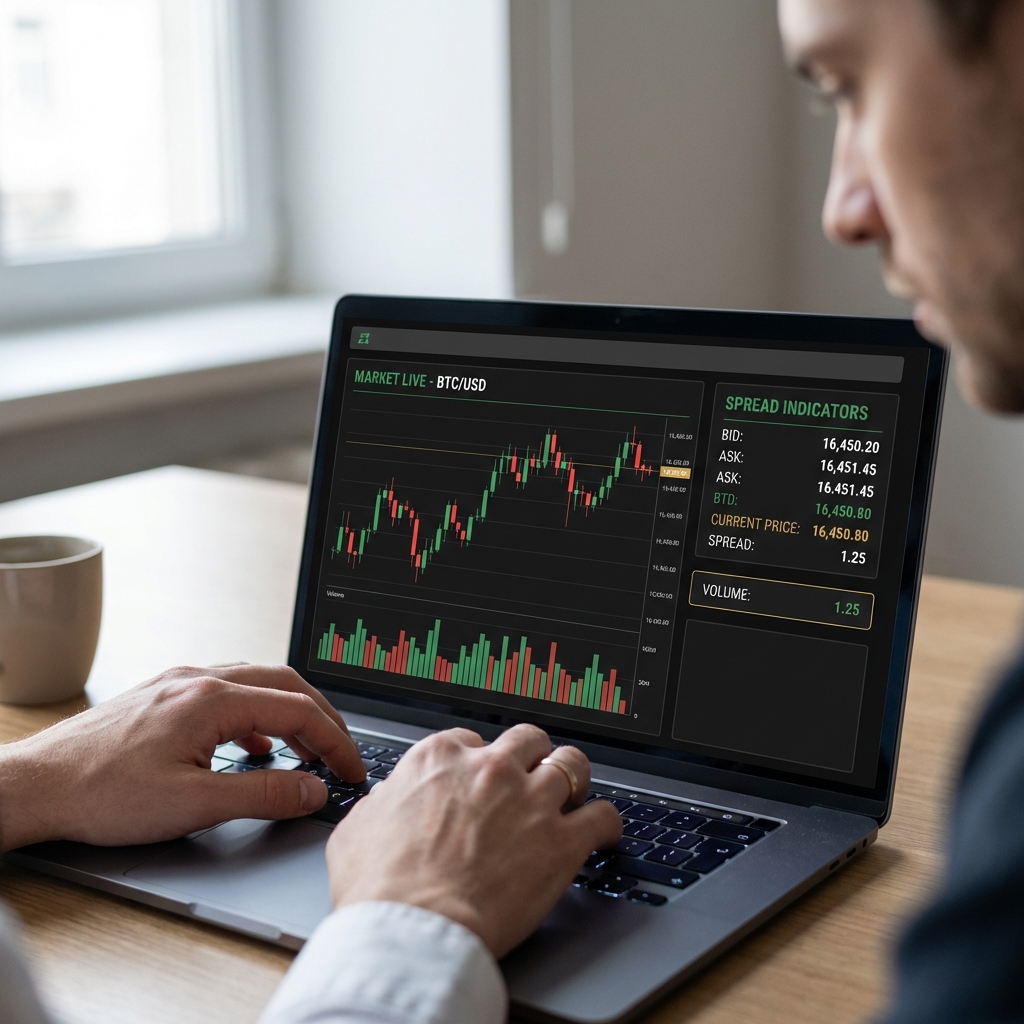
Start with three concrete numbers: market cap, 24 hour trading volume, and the current spread or estimated order book impact for a $100 buy. These figures let you estimate how much slippage you are likely to pay and whether the token is practically purchasable without large price impact.
Step 1, quick screen: use market-data aggregators to filter coins by minimum daily volume and reasonable market cap. Coins with negligible volume often show large spreads and high slippage for small orders, which can make a $100 trade uneconomic.
Step 2, fee check: list all fees you will pay before the trade, such as on-ramp fees to deposit fiat, trading fees or spreads, and network gas if you plan to withdraw tokens. For small amounts these costs are relatively larger, so prefer routes with low fixed fees.
Advertise with FinancePolice to reach readers learning about small crypto allocations
Download the short checklist in this section to run live checks before you trade.
Step 3, slippage estimate: if the order book is thin, a market order can move price and increase the effective cost. Use a small limit order or split the $100 into a few orders if the platform allows, but verify that additional orders do not push you past fee breakpoints.
Step 4, custody check: confirm whether you will hold tokens in a hosted account or transfer to self custody, and understand the steps for each. If you plan to transfer, add network gas and conversion costs into the fee estimate.
Practical metrics to check: market cap, 24h volume, and liquidity
Market cap and 24 hour volume are practical live metrics to screen affordable coins and estimate slippage for a $100 order. Market aggregators update these figures frequently and help you compare tokens side by side before you commit CoinGecko beginner's guide.
Order book depth and the reported spread tell you how much a small market order would move the price. If the spread is a high percentage of your $100, the token is probably not practical for small experiments.
How to estimate slippage and fees before you buy
To estimate slippage, look at the order book and calculate the cost to fill your $100 at current bids and asks. Market-data pages often show liquidity metrics and recent trade sizes that let you approximate the realized price for your size.
Include typical fee lines in a sample calculation. For example, a $100 buy with a 0.5 percent on-ramp fee, a 0.2 percent trading fee, and an estimated 0.8 percent slippage would leave roughly $100 minus those costs as your effective investment. Run the numbers live before you confirm the order and avoid assumptions based on stale figures CoinMarketCap exchange metrics.
Single coin versus a small diversified basket: a simple decision guide
When a single coin can make sense
Concentrating $100 in one coin can make sense if your main goal is a low-complexity test to learn trading mechanics, custody, and how fees affect small positions. Keep this experiment small and accept that idiosyncratic risk will dominate returns.
Academic reviews find cryptocurrencies have heterogeneous fundamentals, so a single coin is effectively a single bet on that asset's path rather than the market as a whole Journal of Financial Stability review.
When a miniature basket reduces risk
A tiny diversified basket can reduce idiosyncratic risk without requiring deep research on one token. Literature indicates that diversification across a few assets lowers single asset volatility, but it increases complexity and sometimes fees when you rebalance Cambridge benchmarking study. See related strategies to reduce risk.
Rule of thumb: for a $100 allocation, three small positions are often the practical maximum before fees and monitoring consume much of the benefit. Size positions so each remains above any minimum trade thresholds and consider equal weights or a slightly tilted sizing to a core liquid option.
Fee management, liquidity choices, and a practical product note
Which fees hurt $100 purchases the most
For small buys, fixed on-ramp fees and network gas typically eat the largest share of the purchase. Trading spreads and slippage also matter, but fixed fees scale poorly for small allocations, so compare total fee percentages across the route you plan to use CoinGecko beginner's guide.
Because fees are a bigger share of a $100 buy, choose networks and on ramps that keep fixed costs low and watch for withdrawal minimums that can force extra charges.
Choosing networks, coins, and on ramps to minimize costs
Some networks and stablecoin routes have lower transfer costs and can make rebalancing and small transfers more practical. When you plan to move tokens off an exchange, compare gas and conversion fees ahead of time and prefer networks with lower confirmed costs for small transfers CoinGecko beginner's guide.
Also consider whether you need to withdraw at all. For a small experiment you may keep holdings on a regulated, verified platform if custody tradeoffs are acceptable for the short run.
Custody, scams, and fraud: decision criteria to keep your $100 safe
How to verify an exchange or wallet
Check platform registration, published custody arrangements, and user verification steps. The SEC guidance urges investors to verify platform credentials and custody terms before depositing funds SEC investor bulletin. Also review our coverage of crypto exchange affiliate programs when evaluating platform claims.
Look for simple red flags like unusually high promised returns, pressure to move funds quickly, or requests for private keys under the pretense of support. Chainalysis reports show scams and stolen funds remain material retail risks, so prioritize basic hygiene before you transact Chainalysis report.
Practical custody options for small balances
For $100, convenience often wins: hosted custody on a regulated platform can be acceptable for a short experiment, provided you verify platform safeguards and withdrawal procedures. If you plan to self custody, understand the backup steps so you do not lose access to small holdings.
Hardware wallets and secure seed backups are best practice, but they add friction and cost that may not be worth it for a tiny, time-limited trial. Choose the option that matches your willingness to learn custody responsibilities and the value of the holding.
Three sample $100 allocations and why they might fit different goals
Below are three labeled examples that highlight tradeoffs in fees, diversification, and custody. None promise outcomes; they are starting points for readers to test the screening and fee checks described earlier.
Verify the platform and custody options, compare live fees and liquidity, estimate slippage, and choose a low-fee route or small diversified allocation as a learning experiment while keeping clear records.
Conservative low-fee allocation
Design: Keep the $100 in liquid, low-fee instruments or stablecoins on a regulated platform to avoid withdrawal friction. This lowers rebalancing costs but limits upside potential compared with riskier tokens.
Why: Prioritize liquidity and low conversion costs so most of your $100 is actually working as an investment rather than covering fixed fees CoinGecko beginner's guide.
Balanced mini-basket
Design: Split $100 into three liquid coins with reasonable 24 hour volume and modest spreads to get a tiny, diversified exposure. Size positions to avoid minimum trade fees.
Why: Small baskets reduce idiosyncratic risk relative to a single coin, as academic studies suggest, but expect slightly higher complexity and potentially higher cumulative fees when you rebalance Journal of Financial Stability review.
Speculative single-coin test
Design: Use $100 as a learning allocation for a single speculative token, limit order to control entry price, and keep the position small to contain downside from scams or high volatility.
Why: A single-coin test is a simple way to learn mechanics and observe price behavior, but it concentrates idiosyncratic risk and should be sized as a learning expense rather than core capital Cambridge benchmarking study. For examples of specific small-order ideas see commentary on the best cryptocurrencies to buy with $100.
How to rebalance, monitor small positions, and think about taxes
Practical rebalancing tips for $100 allocations
Keep rebalancing infrequent for small balances. Trading too often turns potential gains into fee payments. Instead, set simple rules such as rebalancing only when allocations move more than a set percentage or at quarterly intervals CoinMarketCap exchange metrics.
If you hold a mini-basket, consider rebalancing only when position sizes drift materially so that the cumulative trading costs remain a small share of expected changes.
Basic tax and record keeping reminders
Keep records of purchase dates, amounts, fees paid, and withdrawal receipts. Tax treatment varies by jurisdiction and by token classification, so maintain clear transaction logs and consult official guidance or a tax professional when needed SEC investor bulletin.
For small experiments, a simple spreadsheet or export of exchange trade history is often sufficient for later reporting and review.
Common mistakes and pitfalls when investing small amounts in crypto
Fee blindness and choosing low liquidity coins
One common error is overlooking how fixed fees and high gas costs shrink a $100 purchase. Ignoring liquidity can also lead to large slippage that reduces the effective position size dramatically CoinGecko beginner's guide.
Avoid tokens with thin order books or tiny 24 hour volumes unless you accept that a large fraction of your $100 may be paid in spread and slippage.
Falling for promotional hype and scams
Promotional hype and scams remain real risks. Chainalysis notes that while aggregate illicit activity has fallen, scams and stolen funds still contribute significantly to retail losses, so treat offers that promise quick gains skeptically and verify sources Chainalysis report.
Keep verification steps simple: confirm platform credentials, do not share private keys, and pause when pressure tactics or unusual withdrawal instructions appear.
Example walkthrough: placing a $100 buy and estimating final holdings
Choosing an exchange or on ramp
Expect signup and verification on regulated on ramps; these steps matter for custody obligations and for recovering access in case of issues. The SEC highlights the importance of verifying platform credentials and custody arrangements before you deposit funds SEC investor bulletin.
Before depositing, confirm fee schedules, withdrawal minimums, and the available networks for withdrawals so you can estimate total costs.
Stepwise example: fees, slippage, and final coin amount
Worked example: start with $100. Suppose you see a 0.5 percent on-ramp fee, a 0.2 percent trading fee, and an estimated 1.0 percent slippage for the order size. Calculate fees as three lines: 0.5 percent of $100 = $0.50, 0.2 percent = $0.20, slippage ≈ $1.00, leaving roughly $98.30 as the effective amount available to buy the token. Always check live liquidity and fees because snapshots change quickly CoinGecko beginner's guide.
Use limit orders where appropriate to control entry price, and record the final executed price and fees immediately after the trade for your records.
When to use stablecoins or lower fee networks for transfers
Using stablecoins to move value with lower friction
Stablecoins and some lower fee networks can reduce transfer costs and make small trades more efficient when you need to move value between platforms. They can cut conversion friction and avoid multiple on-ramp costs for a $100 experiment CoinGecko beginner's guide.
Remember that using stablecoins introduces counterparty and custody considerations, especially if you rely on hosted wallets rather than self custody.
Network choice and transfer cost tradeoffs
Compare network gas estimates and conversion fees before you transfer. A low fee network can save you a significant share of a small transfer, while a high gas network can make small moves uneconomic.
Do not move funds unless you have reason to; for very small experiments it may be better to keep the holding on a verified platform to avoid incurring withdrawal gas costs.
Quick pre-purchase checklist: what to confirm right before you buy
Run these live checks in the minutes before placing a $100 order: current spread, 24 hour volume, estimated network gas for withdrawals, and platform verification status. These checks reduce the chance that unseen fees or low liquidity will erode your position CoinMarketCap exchange metrics.

Set a maximum acceptable combined fees percentage and a slippage limit you will accept before executing. Record transaction details for taxes and future review.
Primary sources and further reading to verify details
Bookmark the SEC investor bulletin for baseline guidance on custody and platform verification, and use market-data aggregators for live liquidity and fee checks SEC investor bulletin. See our Finance Police crypto category for related articles.
For live market metrics, rely on aggregators like CoinGecko and CoinMarketCap to compare market cap, 24 hour volume, and exchange liquidity before trading. For deeper academic context review benchmarking studies and systematic reviews on crypto heterogeneity CoinMarketCap exchange metrics.
Conclusion: a realistic next step plan for your $100
Starter plan: pick a low fee on ramp, run the checklist above live, choose either a conservative low-fee allocation or a balanced mini-basket sized to avoid minimum fee traps, and keep records of the transaction. Treat this as a learning allocation and avoid frequent trading.
When in doubt, pause and verify platform credentials and live fees before committing funds, and use primary sources for custody guidance and tax basics SEC investor bulletin.
Fees can significantly reduce the effective amount invested for small purchases; compare on-ramp fees, trading spreads, and network gas before buying and run a short fee calculation to see the final amount.
A hardware wallet provides strong self custody but adds cost and setup; for a short experiment hosted custody on a verified platform may be acceptable if you understand the tradeoffs.
A small diversified mini-basket can reduce idiosyncratic risk versus a single coin, but it increases complexity and may incur extra fees; keep positions few and sized to avoid minimum trade penalties.
References
- https://www.coingecko.com/learn/how-to-buy-crypto
- https://www.sec.gov/oiea/investor-alerts-and-bulletins/ib_cryptocurrencies
- https://blog.chainalysis.com/reports/2024-crypto-crime-trends/
- https://www.jbs.cam.ac.uk/insight/2023/global-cryptoasset-benchmarking-study/
- https://www.sciencedirect.com/science/article/pii/S1572308922000321
- https://coinmarketcap.com/exchanges/metrics/overview/
- https://paybis.com/blog/6-best-platforms-to-buy-crypto-under-100-dollars/
- https://financepolice.com/advertise/
- https://financepolice.com/strategies-to-reduce-risk-in-cryptocurrency-investments-through-diversification-in-2025/
- https://financepolice.com/crypto-exchange-affiliate-programs-to-consider-heres-what-you-need-to-know/
- https://financepolice.com/category/crypto/
- https://www.webull.com/news/14049822873191424
- https://www.fool.com/investing/2025/02/16/2-bitcoin-etfs-to-buy-with-100-and-hold-forever/